
| Reshaping Urban Conservation, The HUL Approach in Action |
| Author:Simone Ricca PublishDate:2019-05-01 Hits:5456 |
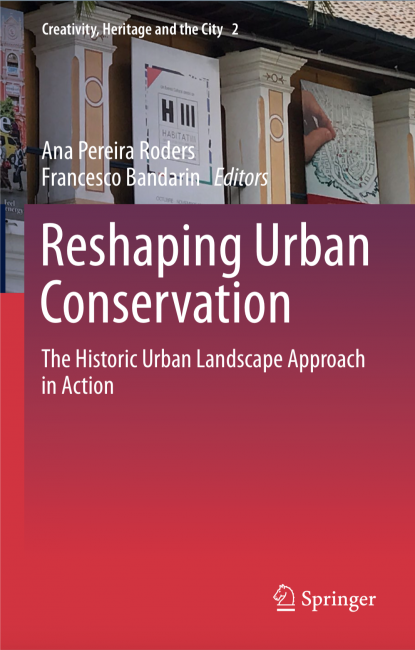
The new book by Ana Pereira Roders and Francesco Bandarin is the last addition to the growing literature on the UNESCO 2011 Historic Urban Landscape Recommendation (HUL).
As reminded by the editors in the Preface, “this book aims to be empirical, describing, analysing and comparing a sample of 28 cities taken as case studies to implement the HUL approach. From those cases, many lessons can be learned and much guidance shared on best practices concerning what can be done to make the HUL approach work. Whereas the previous studies served to illustrate issues and challenges, in this volume the studies point to innovations in regional and urban planning and management that can allow cities to avoid major conflicts and to further develop their competitiveness.” (p. vii).
Francesco Bandarin, one of the fathers of the HUL Recommendation, previously co-authored with the regretted Ron van Oers, to whom the book is dedicated, two other important volumes: “The Historic Urban Landscape, Managing Heritage in an Urban Century” (2012 – translated into Chinese by WHITRAP in 2017 and “Reconnecting the City, the HUL Approach and the Future of Urban Heritage” (2015).
 |


- News|Executive Vice President Lyu Peiming Meets with UNESCO External Evaluation Expert
- News | UNESCO Office in Hanoi and WHITR-AP Shanghai Hold Bilateral Cooperation
- Preview丨2026 HeritAP Chat on WH Contribution to SDGs Knowledge & Skills
- 2026 Call for Applications | Young Masters for Heritage Conservation
- News| Growing Up in Pingyao Named to the 100 Best Books of the 13th “New Reading China Children‘s Book List” (2025)
- News | First Session of UHC-HEI Steering Committee



Copyright © 2009-2026 World Heritage Institute of Training and Research for the Asia and the Pacific Region