


1. General overview of the 46th session of the World Heritage Committee, New Delhi, 2024
Introduction
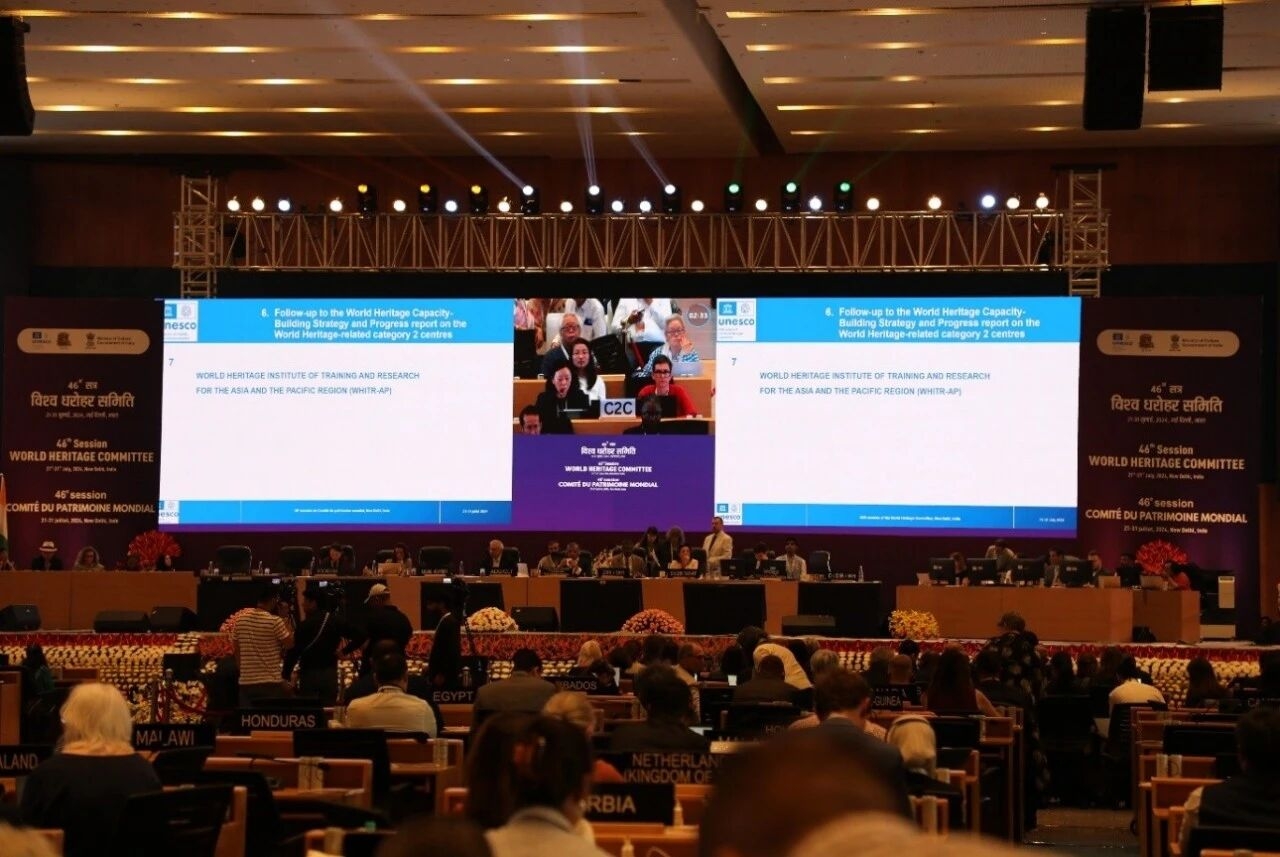
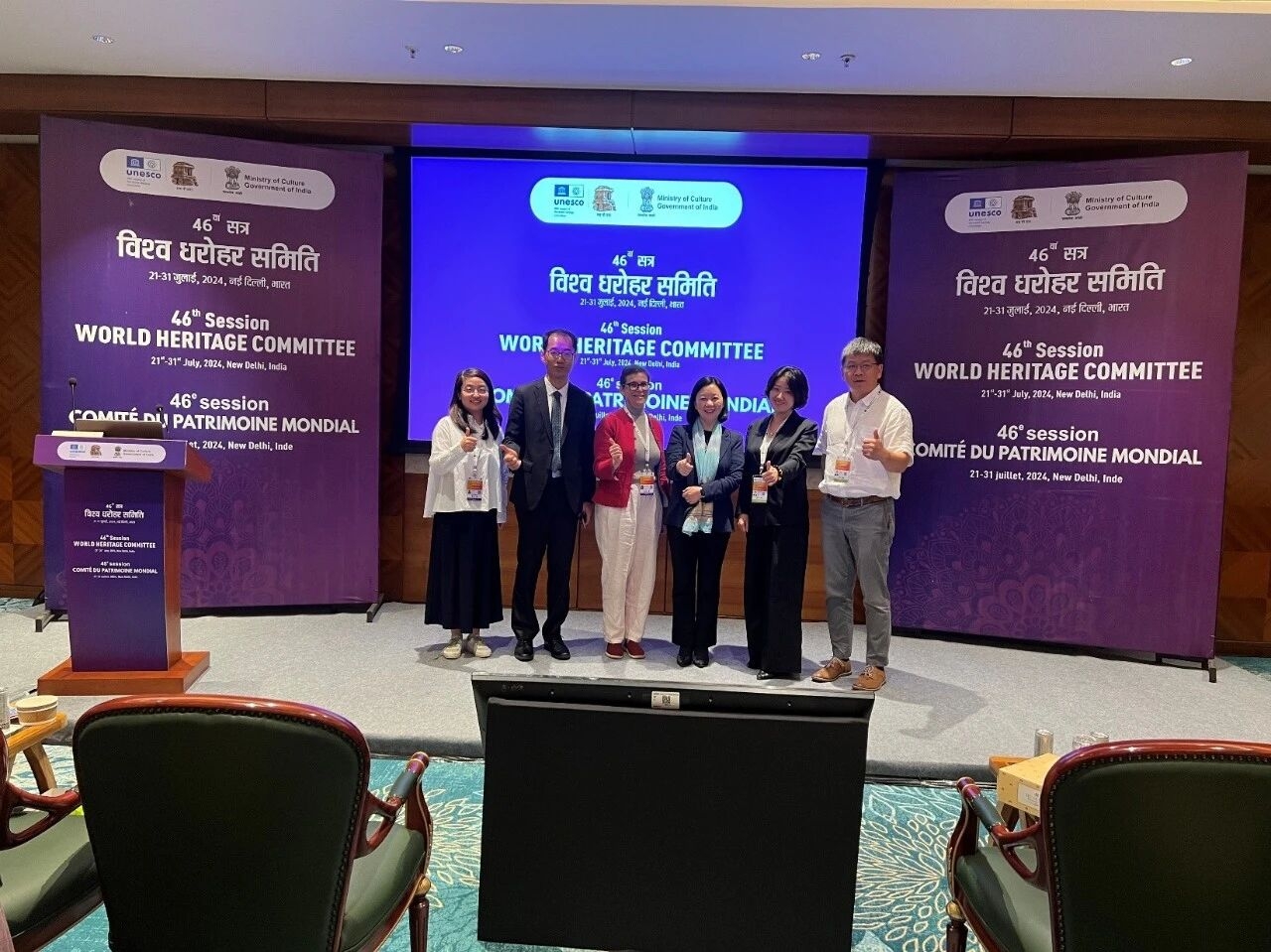
Following the 45th Extraordinary session of the World Heritage Committee, which was held in Riyadh, Saudi Arabia, the 46th session of the Committee took place for the first time in India, in New Delhi, Republic of India from 21 July to 31 July, at the Bharat Mandapam International Exhibition and Convention Centre. It was hosted by the Ministry of Culture Government of India and the Archaeological Survey of India, the main body in charge of ancient monuments and archaeological sites of national importance and is responsible for their protection, preservation and conservation.
The World Heritage Committee is one of the two bodies governing the World Heritage Convention. It is composed of the representatives of 21 States, elected from the 195 States parties to the Convention. It is responsible for implementing the Convention, examining new proposals for inscription on the World Heritage List, and assessing the state of conservation of sites already inscribed, based on analyses produced by UNESCO’s advisory bodies and its Secretariat, the World Heritage Centre. It manages the World Heritage Fund, defines key trends and thematic strategic objectives, and develops the Operational Guidelines for the Implementation of the World Heritage Convention. It meets once a year in an ordinary session.
The 46th session
For its 46th session, the Chairperson was M. Vishal V. Sharma, Ambassador and Permanent Representative of the Republic of India to UNESCO and the Rapporteur was M. Martin Ouaklani (Belgium) who took over from Ms Shikha Jain (India), the Rapporteur of the 45th session. The 5 Vice-Chairpersons were representatives of Bulgaria, Greece, Qatar, Kenya and Saint Vincent and the Grenadines and the 21 Committee members were Argentina, Belgium, Bulgaria, Greece, India, Italy, Japan, Mexico, Qatar, Rwanda, Saint Vincent and the Grenadines, and Zambia with Jamaica, Kazakhstan, Kenya, Lebanon, Republic of Korea, Senegal, Türkiye, Ukraine, Viet Nam as new Committee members elected in November 2023 at the 24th General Assembly of UNESCO. All working documents of the World Heritage Committee meeting including video recordings are available here:
https://whc.unesco.org/en/sessions/46COM/documents/
World Heritage in India and New Delhi
India ratified the World Heritage Convention (1972) in November 1977 and has on date 43 properties inscribed on the World Heritage List, 35 Cultural, 7 Natural and 1 Mixed. India has already served three terms as a Committee member in 1985-1989, 2001-2007, and 2011-2015, and is now serving its fourth one from 2021 to 2025.
India has taken an active role in the life of the World Heritage List, with the Agra Fort, the Ajanta Caves, Ellora Caves, and the Taj Mahal, inscribed in 1983, being amongst the oldest inscriptions on the List and enriching the List with innovative and complex types of heritage such as the Himalayan Indian Railways inscribe in 1999 which was then one of the earliest large-scale industrial heritage sites. It was later extended in 2005 and 2008 to become a serial site renamed Mountain Railways of India.
The city of New Delhi, the capital city of India has a history going back many centuries, it is home to three World Heritage sites Qutb Minar and its Monuments, Humayun's Tomb and the Red Fort Complex.
Opening Ceremony
The 46th session of the Committee was opened by M. Narendra Modi, Prime Minister of India, who reiterated India’s dedication to multilateralism and safeguarding heritage and announced a $1 million contribution to the World Heritage Centre to support capacity-building efforts in Africa and Small Island in Developing States in Asia. In her opening address, UNESCO Director General, Ms Audrey Azoulay, recalled UNESCO’s concern to promote peace and advocate the prominent role of Culture as a main catalyst in a fragmented world. Azoulay showcased throughout her address UNESCO’s involvement in the global policy dialogue on Culture and the full relevance of the World Heritage Convention as an essential instrument. Regarding World Heritage, she highlighted the challenges heritage was facing such as the impacts of Climate Change on sites or the effects of over tourism. She underlined the important efforts undertaken to develop capacity-building initiatives around the world. She furthermore insisted on how the Danger List should not be considered negatively but as means to achieve desired conservation goals. Azoulay also mentioned strengthening the links between all types of heritage, particularly the nature-culture linkage, synergies between tangible and intangible heritage and acknowledging all types of stakeholders, the importance of which the World Heritage Committee has consistently advocated for the past years.
Key items
In 2024, from 23 to 25 July, the Committee examined the state of conservation of 124 sites already inscribed on the World Heritage List, including 57 on the List of World Heritage in Danger, of which one was removed, Niokolo-Koba National Park in Senegal thanks to the joint efforts to reduce threats to the site, made by the Senegalese authorities in collaboration with local communities, and with the support of UNESCO.
From 26 to 29 July, it also examined 28 nomination proposals for inscription on the World Heritage List but inscribed only 26, including 2 major extensions to properties which are considered as new inscriptions. The new inscriptions include 20 cultural properties, 5 natural properties and 1 mixed site, bringing the total number of properties inscribed on the World Heritage List to 1223 in 168 countries. One site ‘Saint Hilarion Monastery/ Tell Umm Amer’ in Palestine’, was both inscribed on the List and on the List in Danger to recognize both the value of the site and its dire need for protection.
It also examined reports on the work of the World Heritage Centre, the UNESCO Category 2 Centres such as WHITRAP, and statutory processes such as the Preliminary Assessment two-phase nomination process. It examined and discussed the management and implementation of the World Heritage Fund -- which is a specificity of the World Heritage Convention compared to other Convention -- and the sustainability of the Convention, with State Parties underlining the paradox of an ever more successful Convention and the limited human and final resources of UNESCO’s World Heritage Centre and the Advisory Bodies as a crucial ongoing challenge. Several States Parties to the Convention were allocated additional funds to finance new conservation work on properties on their territory.
Key trends
In the continuation of the previous Committee sessions, the key trends were the focus on thematic areas such as synergies between Conventions and programmes related to Biodiversity or tangible and intangible heritage as well as impacts and measures to mitigate Climate Change and promote Climate Actions. The Committee further highlighted the crucial need for the Protection of heritage at risk and the duty to collaborate with local communities in times of conflict. The importance of communities, people-centred approaches, acknowledging Indigenous people and the role of civil society was one more promoted, as a priority area but also by continuing its policy to give the floor to observers. Furthermore, the Committee continued to promote Priority Africa: a strategy for World Heritage, even beyond World Heritage as part of the implementation plan of the Operational Strategy for Priority Africa 2022-2029. Africa is one of the key UNESCO priorities of its overall Programme. The Strategy for Africa aims to:
a) to assist 12 African States Parties not yet represented on the World Heritage List in developing a nomination (see footnote 9 of the Strategy)
b) to provide support to properties on the List of World Heritage in Danger in establishing a Desired state of conservation for their removal from this list (DSOCR)
c) to increase the number of African heritage experts working in the World Heritage system and enhance the role of African universities to be involved in World Heritage processes
d) to operationalize the pan-African network of site managers
e) to develop projects on entrepreneurship and the use of new and innovative technologies
Site Managers Forum and the Young Professionals Forum
As in the previous years, the World Heritage Site Managers Forum and the Young Professionals Forum preceded the Committee session and their respective outcomes were presented at the Committee. The 2024 edition of the Youth Forum focused on World Heritage in the 21st Century: Building Capacities and Exploring Opportunities for Youth from 14 to 23 July 2024. The Site Managers Forum, confirmed its successful enterprise of fostering site-to-site cooperation, sharing hands-on experiences and furthering theoretical discussions.
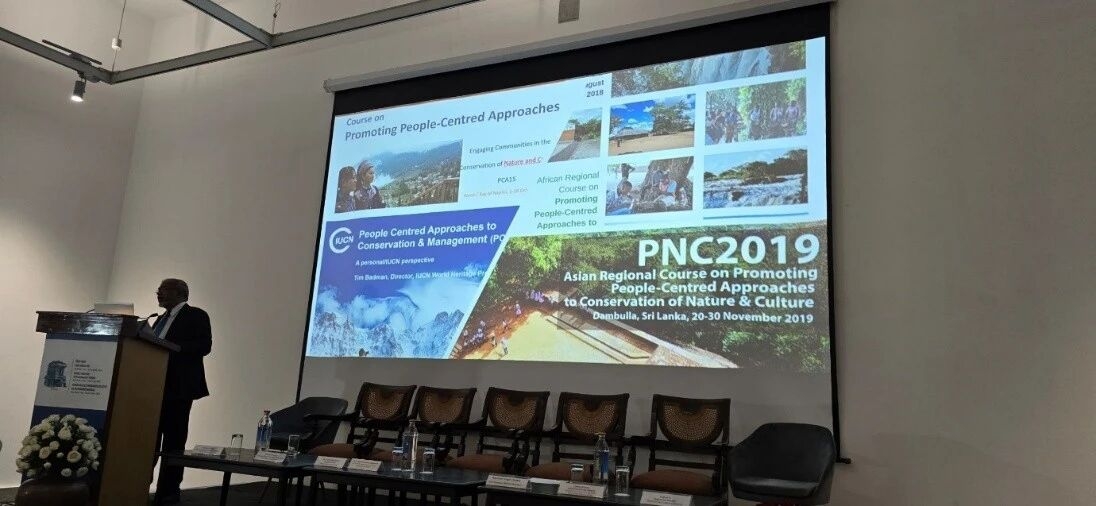
Dr Gamini Wijesuriya, Special Advisor of WHITRAP, attended the 6th World Heritage Site Managers’ Forum held at Humayun’s Tomb World Heritage Site and Bharat Mandapam International Exhibition and Convention Centre, New Delhi, India from 18 – 25 July 2024. There were 80 participants at the Forum, 40 foreigners and 40 Indians. He delivered the Keynote on Heritage and Communities. In his speech, he stressed that people should be at the heart of the heritage discourse, which we call the people-centred approach promoted by the World Heritage Centre. Engaging communities is about working collectively in a more innovative manner and it is important to improve the quality of life of the communities. By looking ahead, we must envision a future where heritage management is deeply integrated with sustainability, innovation, and community participation.
Side events
The Committee session was an opportunity for the World Heritage community at large to share experiences and foster dialogues through 40 sides events from 22 to 29 July organized by State Parties, international and national agencies, ICOMOS, IUCN and ICCROM the advisory bodies, local governments, NGOs, Academia and C2Cs. Topics ranged from highlights on individual site management to dialogues on thematic issues such as in particular, Education, Climate Change, Urban Heritage, synergies between the Tangible and Intangible Heritage or strengthening the voice of Communities and Indigenous people, Marine Heritage or the latest tool kits for World Heritage management.
WHITRAP organized a side event on 23 July from on July 23rd, local time in India, the “Science, Creativity, Empowerment – World Heritage Education Towards the Future” which allowed it to showcase its activities and International Networks it developed in the area of Education.
The WHITRAP team attended and participated in a series of side events, such as “Climate Action Toolkit for World Heritage” organized by ICCROM, the Australian Government, IUCN, ICOMOS and UNESCO, on 23 July, or “Managing Historic Cities in India”, organized by the Madhya Pradesh Tourism Boards and National Institute of Urban Affairs on 24 July, or the "Heritage in Hands: conserving the creativity of Craft Making Sites", organized by ICOMOS and the Chinese National Administration of Cultural Heritage on 25 July to name a few, which were an opportunity to share expertise, promote WHITRAP’s activities and create new ties.
Focus on C2C
WHITRAP Shanghai actively participated in the side event on “World Heritage related C2C under the auspices of UNESCO: prospects and Opportunities” organized by the host country, by the Centre on World Natural Heritage Management and Training for Asia and the Pacific Region, India (WII-C2C). Opened by Lazare Eloundou, Director of the World Heritage Centre, which is particularly attentive to highlighting the important role of C2C in the implementation of the Convention, allowed to convene the other C2Cs, the Regional Heritage Management Training Centre “Lucio Costa” (IPHAN) Brazil, the Regional World Heritage Institute in Zacatecas (RWHIZ), Mexico, the International Centre for the Interpretation and Presentation of World Heritage Sites (WHIPIC), Republic of Korea, the International Centre for Rock Art and the World Heritage Convention (ICRAWHC), Spain, the International Centre on Space Technologies for Natural and Cultural Heritage (HIST), China the African World Heritage Fund (AWHF), South Africa and the Arab Regional Centre for World Heritage (ARC-WH), Bahrain, to deliberate on World Heritage Capacity building.
In recent years, the role of C2C has become stronger, with more and more solicitation by the World Heritage Committee and the Centre to play a key role in implementing the World Heritage Committee’s key priorities, strategic initiatives and statutory process, in particular in the area of Capacity Building or Periodic Reporting. In the past years, the World Heritage C2C have strengthened their cooperation through joint activities or strategic partnerships.
For example, for the first time in the World Heritage Committee’s agenda, Category 2 Centres were invited in Item 6B to take the floor to share their Progress report on the activities concerning the implementation of the Convention.
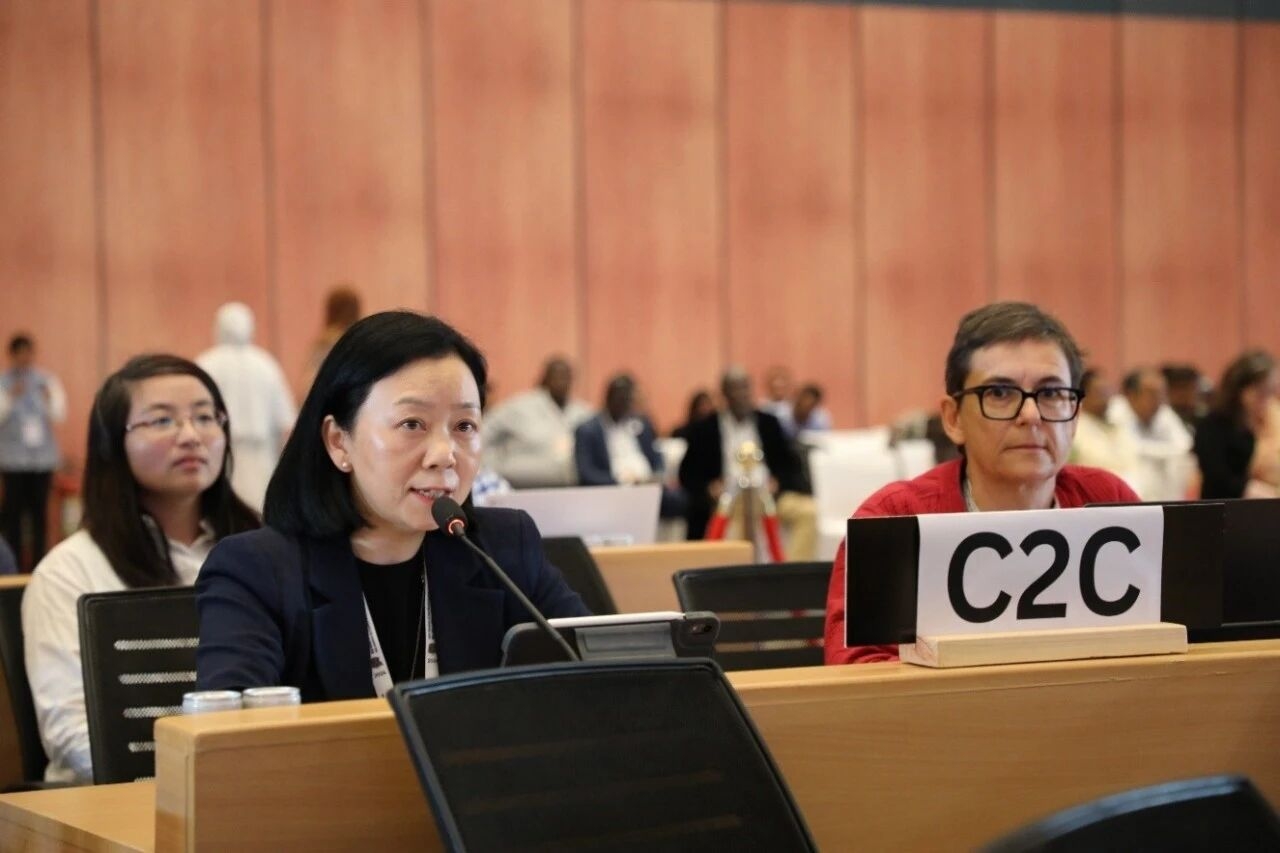
Meetings of C2C at the World Heritage Committee or the annual event, hosted in turn by each Centre, informal gathering or side event, are particularly important to create synergies, share efforts, and promote interregional cooperation projects to streamline priority initiatives.
Conclusion
With around 1000 participants, the World Heritage Committee once again showed how important it was not only in the management of the World Heritage Convention from the statutory perspective but also as a forum allowing multiple stakeholders to gather, exchange and raise voices to protect heritage and those communities which need to be empowered.
For WHITRAP, it was an opportunity to strengthen existing ties with the World Heritage Centre, and its longstanding partners such as ICCROM, ICOMOS and the other C2Cs as well as tying new relationships with practitioners and State Parties which will lead to the development of further activities, through side event and one to one meetings and side-line discussions.
The 46th session of the World Heritage Committee ended on Wednesday 31 July with the ratification of the World Heritage Convention by Nauru, which became the 196 State Party to the Convention, reinforcing its status as one of the most internationally ratified standard-setting instruments in the world and by the Committee announcing that its next session would be held next summer, in Sofia, Bulgaria, under the chairmanship of Professor Nikolay Nenov.
Contribute by: Marie-Noël Tournoux
Edited by: Zhang Haowen (intern)
Web typeset by Zhang Yidan (Intern)

| Password: |

