


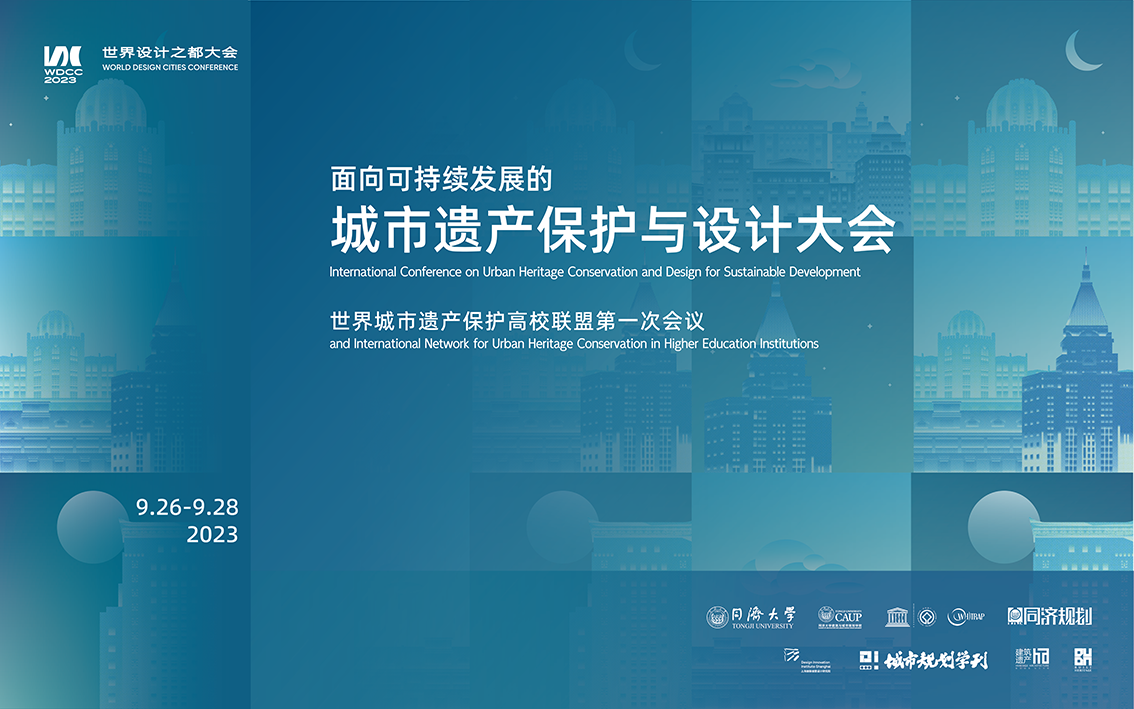
From 26 to 28 September 2023, the “International Conference on Urban Heritage Conservation and Design for Sustainable Development” and the first meeting on the establishment of the International Network for Urban Heritage Conservation in Higher Education Institutions were successfully held at the historic building of the former Lester Institute of Technical Education at Design Innovation Institute Shanghai and the Wenyuan Building at Tongji University campus. The conference was hosted by Tongji University and co-organized by the College of Architecture and Urban Planning (CAUP), World Heritage Institute of Training and Research for the Asia and Pacific Region (Shanghai), a Category 2 Centre under the auspices of UNESCO (WHITRAP Shanghai), and Shanghai Tongji Urban Planning and Design Institute Co., LTD (TJUPDI). The event was also presented as a forum during the 2023 World Design Cities Conference.
More than 35 participants attended the 3rd session themed “Workshop on Higher Education towards Sustainable Development Goals”. It was chaired by Prof. Zhang Peng and was designed as a workshop, held online and offline on the 27th afternoon. It proposed to discuss the initiative for an International Network for Urban Heritage Conservation in Higher Education Institutions. Its aim was to address educational practices and needs for urban conservation and development by inviting Universities and Higher Education Institutions and partner Institutions to share their experience and thinking on (1) Research; (2) Education; and (3) Action, with insight into their scope, goals, methods and outcomes as well as a focus on evolving needs and beneficiaries. To facilitate the discussions participants were invited to reflect on three preparatory questions:
1
Based on the Sustainable Development Goals, what are the study areas and approaches that require rethinking in the urban heritage conservation field, at the level of education, research, and action?
2
How can we combine traditional knowledge with modern technology in education, research and action for urban heritage conservation and sustainable development?
3
What are the main aims, motivations, and reasons for setting up and participating in this Network at the level of education, research and action?
Following a presentation of the aims of the session and its working method by Prof. Plácido González-Mártinez, Prof. Zhang Peng and Marie-Noël Tournoux respectively introduced Heritage Education at Tongji University and WHITRAP Shanghai.
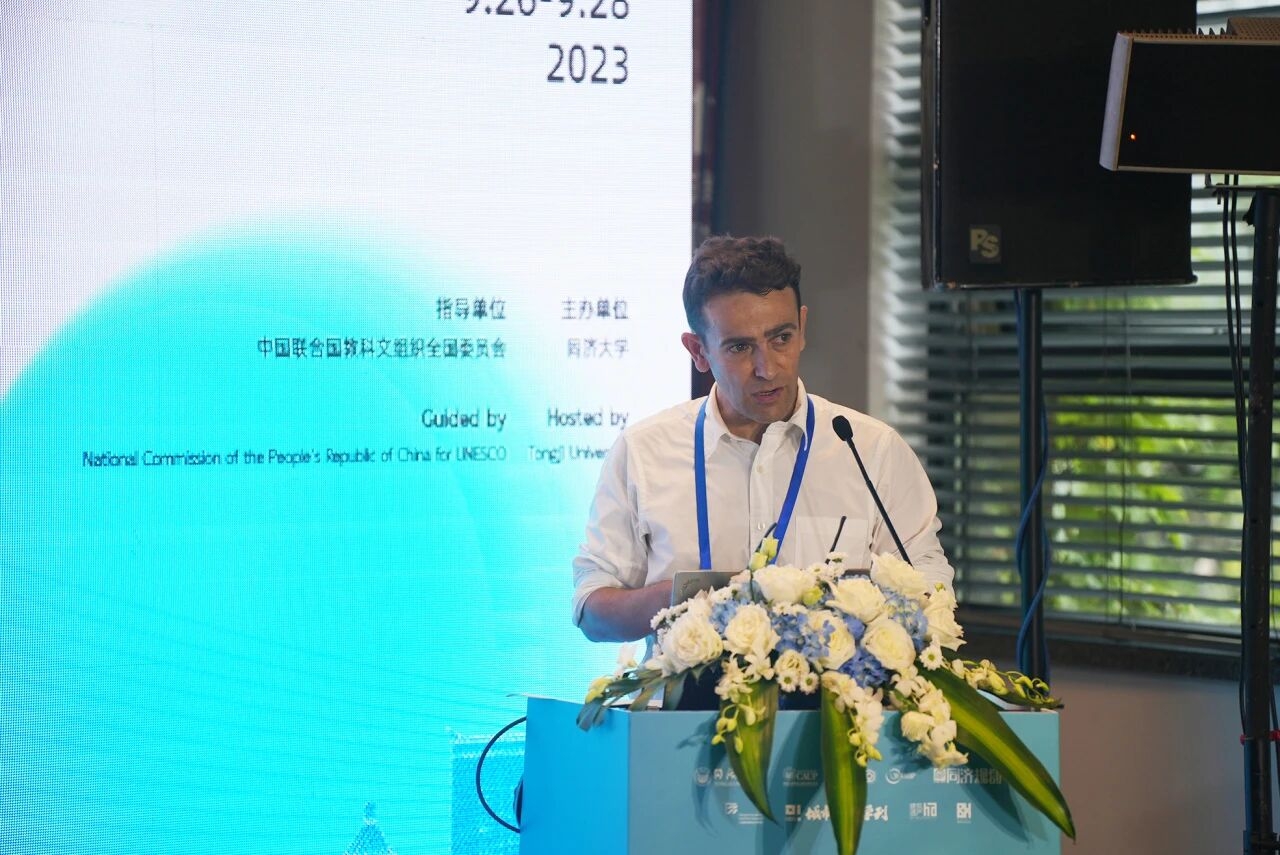
Prof. Zhang Peng
Heritage Education at Tongji University
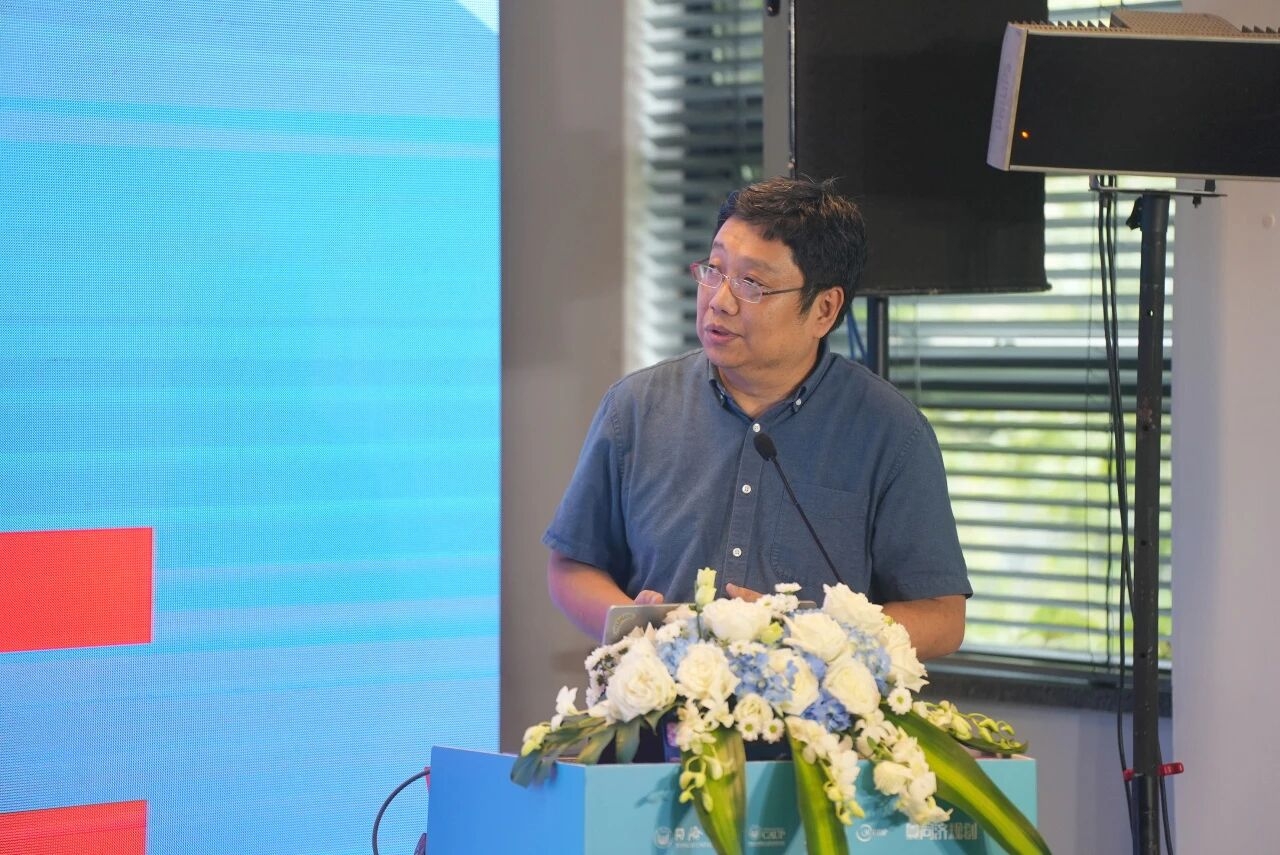
In his introduction, Prof. Zhang Peng presented the history and aims of Tongji’s College of Architecture and Urban Planning (CAUP) and its Research Supported Architectural Education approach and its key areas of New Architecture, Built Environment and Heritage. He further described the Built Heritage education strategy. He furthermore presented CAUP’s new undergraduate courses, Master, and PhD courses as well as the innovative Cross-Discipline Research Group integrating architecture, urban planning, landscape, civil engineering, history and survey. In the last part of his presentation, he focused on CAUP’s national and international cooperation and network activities.
Marie-Noël Tournoux
Heritage Education at WHITRAP Shanghai
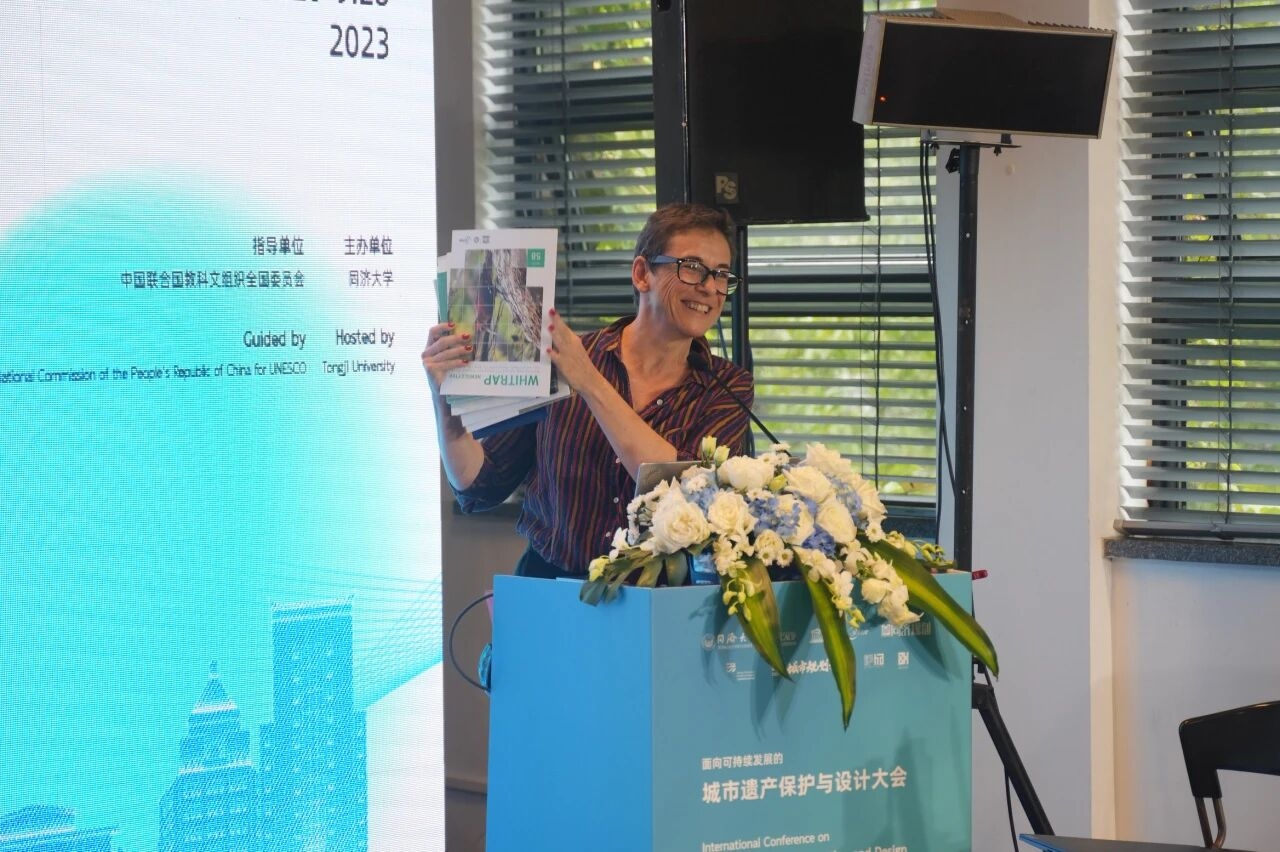
In her background introduction to WHITRAP, Marie-Noël Tournoux presented what are Category 2 Institute and Centres (C2C) under the auspices of UNESCO and their relation to the Organization. She continued by providing an overview of WHITRAP’s history and key objectives and some of the current main activities pertaining to training and raising awareness initiatives. She further explained how C2C engage with universities and WHITRAP’s special relationship with CAUP Tongji. She detailed how WHITRAP as a C2C allowed the development of regional and international cooperation, and served as an innovative platform and hub to implement joint and pilot activities.
These introductions were followed by presentations and round table discussions. Participants introduced their respective institutions, experience and approach to education, research, and existing networks and shared their reflections on the three preparatory questions. For the sake of greater efficiency, participants were distributed in three parallel small working groups, chaired by (1) Prof. Zhang Peng, (2) Prof. Plácido González-Mártinez and (3) Marie-Noël Tournoux.
There were many topics covered during the Workshop and many came back in the discussions on each of the three questions. Participants stressed the need to consider traditional knowledge systems, which should come together with modern technology. Linking the two allows to expand the boundaries of disciplines and further the knowledge of heritage for conservation, management, project design, and decision-making purposes as well as for facilitating interpretation and knowledge sharing to a wider audience. Discussions highlighted the importance of observation be it through new technologies or hand drawing, reaching out to stakeholders, such as local communities, outside the academic world, interdisciplinary approaches as well as relinking theory and practice. Pluri-disciplinary approaches were considered a priority (including social sciences, engineering, new technologies and economics) as well as transversality between institutions and different types of stakeholders. Throughout the discussions Climate Change, the wellbeing of populations, and contributing to reaching the Sustainable Development Goals also came back as key challenges to address. They furthermore stressed the importance of considering the role and function of heritage differently, looking at heritage as a solution and not only as an object and considering its “learn-from” quality to provide sustainable and resilient responses to key threats and allow to meet the Sustainable Development Goals. They insisted on the need to qualitatively value the strength of heritage to quantitatively demonstrate its power.
The participants all underlined the need to act and think differently, insisting on the responsibility of universities and higher education institutions to develop new approaches to integrate conservation and development in Higher Education. This means not only rethinking the conceptual content of curricula but also developing new educational models and practices, including creating practicioner doctorates to allow "dirty hands" to be certified by universities. Furthermore, they encouraged reconsidering the physical setting of higher education institutions, and revising the teaching-learning experience with a focus on problem-solving and practice-oriented methods and diplomas. The way forward was initiating long-term structural reforms inspired by pilot educational experiences. All underlined how theory should inform and improve methodologies used in practice. Sharing experiences and networking were addressed extensively in the discussions on the three topics.
Presentations showcased the rich and multifaceted expertise, diversity of pedagogical approaches, and attention to innovating and meeting today’s contemporary requirements and needs. They also detailed the multiple forms of knowledge production systems in multiple areas of urban heritage conservation held by different universities and higher education institutions. Participants discussed how a network could contribute to filling the research gaps and contribute to competency building. Field projects were largely praised for engaging with stakeholders outside academia and as a way to address crucial issues such as governance and challenging stereotyped development models, in particular economic models in heritage and development processes. Formal cooperation between institutions allowing student and faculty exchanges, experimental pedagogy through Summer School or fieldwork, and innovative research, as well as access to sources of funding based on national and international incentives was highly supported. All in all, the participants provided very rich ideas for defining the next steps, research topics, seminars, training sessions as well as joint projects.
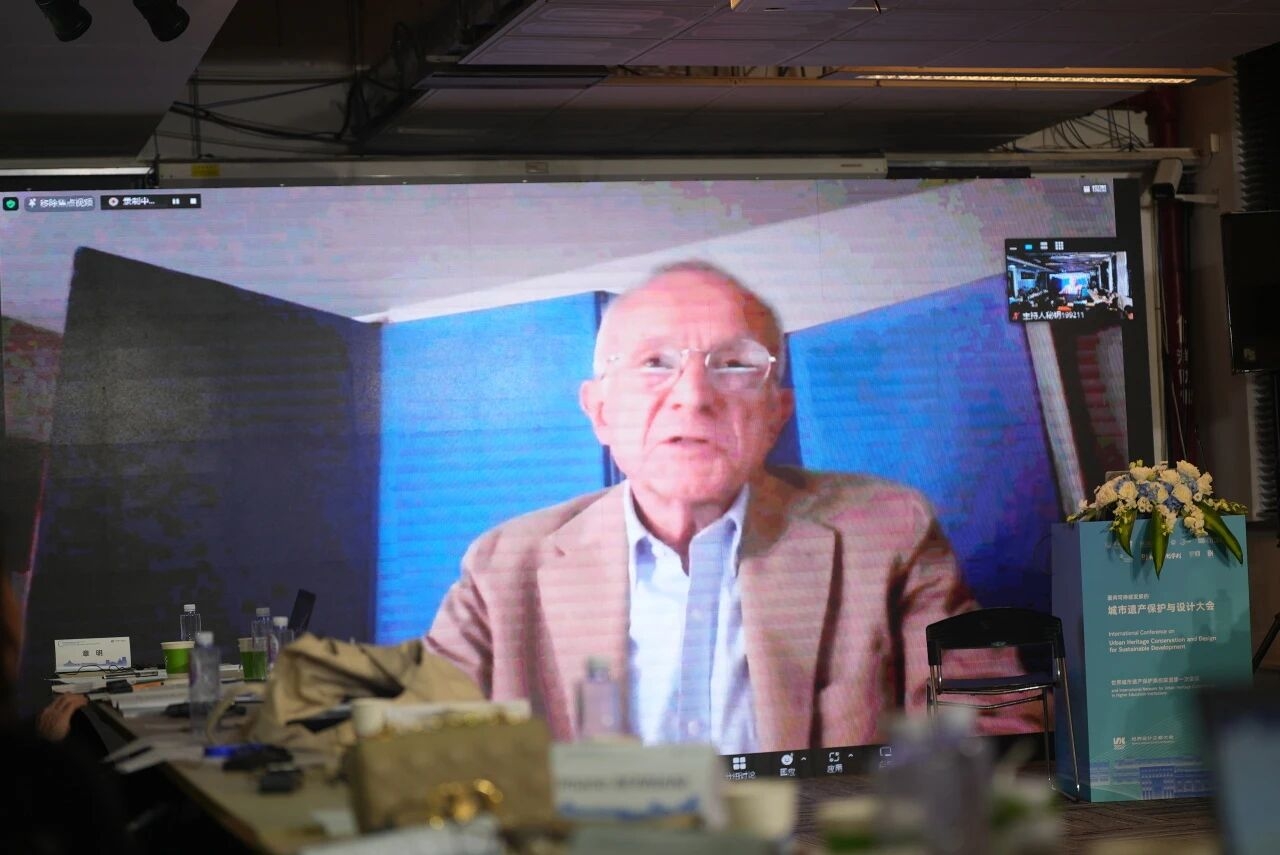
The results of the working groups were presented in the plenary followed by thoughtful reflections by Prof. Benjamin Mouton based on the participant’s written contributions and his reflection. Prof. Benjamin Mouton, first commented on heritage and sustainable development as two decisive concepts, which are now at the forefront of international discussions when it comes to the future of the planet. He developed 5 key points. In his first point, he stressed that Heritage should be considered as a whole, which varies in scale, types and time and is not solely what still stands. He further commented on Sustainable Development, highlighting the paradox of the combination of the two terms. As one term conveys the notions of transformation of societies, implicitly of progress and opens the discussion on the legitimacy of growth. Whilst the other conveys the notion of duration, stability, and permanence. From the combination of these two contrary terms arises the notion of improving the living conditions of Humankind in its environment. His third point focused on how few tangible heritage features have remained unchanged in time and are therefore more or less easy to understand. Vernacular heritage, and rural and small urban settlements have kept a higher level of integrity because as they have been often neglected, they have undergone little transformation. He further underlined how vernacular heritage could provide answers to the challenges of tomorrow’s society and provide solutions to the impact of climate change. In the fourth point, he insisted on the relevance of traditional knowledge systems as part of modernity and how crucial it was to stop opposing the present, and the future. He warned against the illusion of substituting modern technologies for traditional knowledge, but continued, by explaining how modern technologies could provide in-depth analyses of heritage and improve conservation processes. He insisted on how the role of traditional knowledge systems was a key component of sustainable development. In his fifth and last point, he addressed the issue of “should we keep everything?” And what are the acceptable transformation criteria? He stressed that the issue was less about knowledge than about methodology and analysis. It is the common denominator that should prevail at the international level, for the equitable conservation of all heritage, and not only “World Heritage” which is only a special case.
Session 3 was followed by the Closing Ceremony. Marie-Noël Tournoux and Prof. Plácido González-Mártinez respectively provided a summary of sessions 1 and 2 and the main outcomes of session 3. Prof. Shao Yong, Executive Director of WHITRAP Shanghai followed by presenting the draft Initiative on Urban Heritage Conservation and Design for Sustainable Development and Roadmap for Urban Heritage Conservation in Higher Education Institutions. The participants reached a consensus on the common objective of the Network: to improve, through their contribution from the academic sector, the quality of the historic urban landscape. Considering the lively and high-level debates, participants agreed on the relevance of the fruitful cooperation which is being initiated for building together a bright future for heritage education. The participants were asked to provide feedback on this draft document, to develop a Network structure and strategy, to be used as a reference by the members in the future.
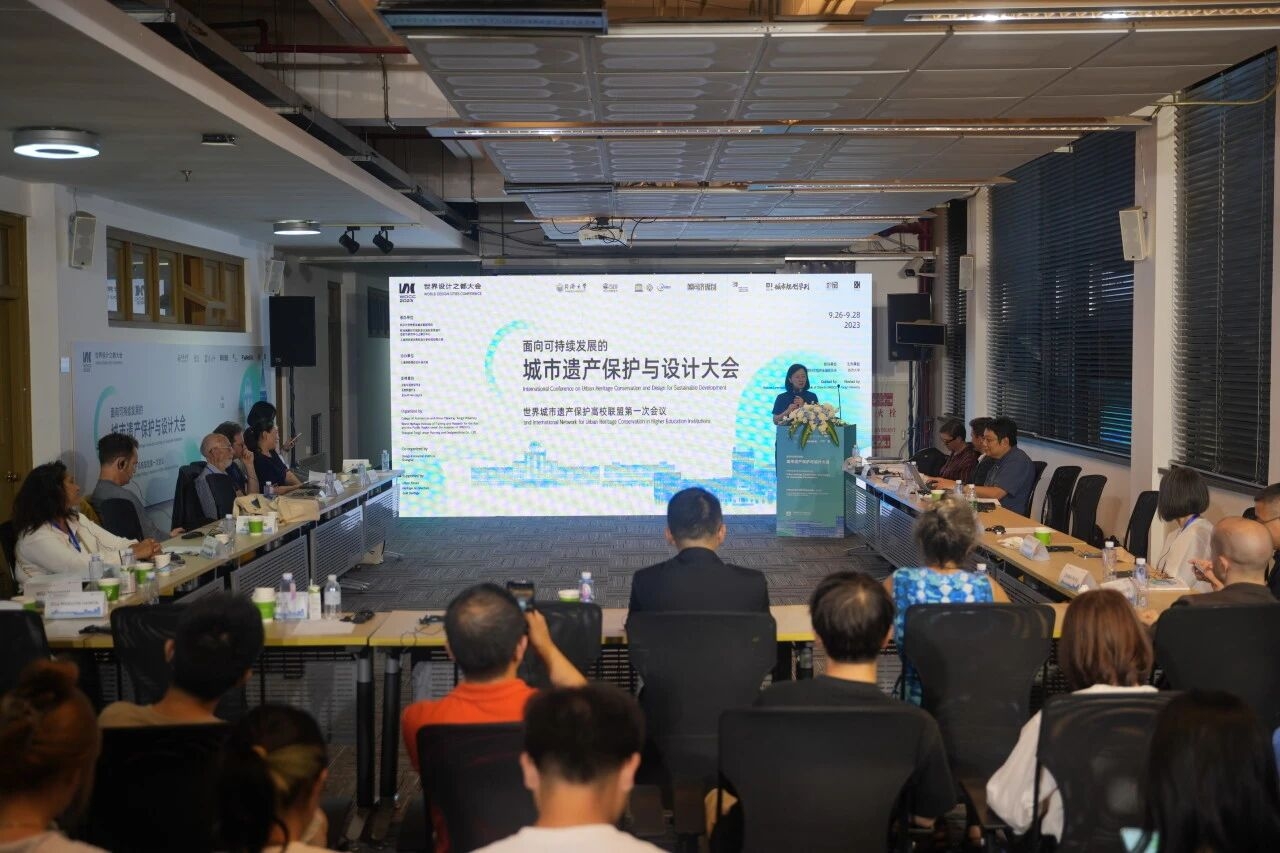
Initiative on Urban Heritage Conservation and Design for Sustainable Development and Roadmap for Urban Heritage Conservation in Higher Education Institutions (draft)
1. On 26 to 28 September 2023, Tongji University, as host, together with the College of Architecture and Urban Planning (CAUP), the World Heritage Institute of Training and Research for the Asia and the Pacific Region, a Category 2 Centre under the auspices of UNESCO (WHITRAP Shanghai), Shanghai Tongji Urban Planning & Design Institute Co. Ltd (TJUPDI), co-organized an International Conference on Urban Heritage Conservation and Design for Sustainable Development and held the first meeting on the establishment of the International Network for Urban Heritage Conservation in Higher Education Institutions.
1. 2023年9月26至28日,同济大学、同济大学建筑与城市规划学院(CAUP)、联合国教科文组织亚太地区世界遗产培训与研究中心上海分中心(WHITRAP上海)和上海同济城市规划设计研究院有限公司(TJUPDI)共同举办了“面向可持续发展的城市遗产保护与设计大会”暨“世界城市遗产保护高校联盟第一次会议”。
2. The participants reflected on three main areas of interest Education, Research and Action and in particular discussed three questions:
2. 与会者围绕教育、研究和行动三个层面,重点对三个问题进行了探讨:
Question 1: Based on the Sustainable Development Goals, what are the study areas and approaches that require rethinking in the urban heritage conservation field, at the level of education, research, and action?
问题1:基于可持续发展目标,在城市遗产保护领域,在教育、研究和行动层面,有哪些研究方面和方法需要重新思考?
Question 2: How can we combine traditional knowledge with modern technology in education, research and action for urban heritage conservation and sustainable development?
问题2: 在城市遗产保护与可持续发展的教育、研究与行动中,我们如何将传统知识与现代技术结合起来?
Question 3: What are the main reasons, aims and forms for setting up and participating in this Network at the level of education, research, and action?
问题3: 在教育、研究和行动层面建立和参与该联盟的主要原因、目的和形式是什么?
3. They, furthermore, discussed the setting up of an International Network for Urban Heritage Conservation in Higher Education Institutions which would aim to strengthen cooperation with and among Universities and Higher Education Institutions that have recognized urban heritage conservation as a key subject of their teaching, research, and action plans.
3. 此外,他们就建立一个“世界城市遗产保护高校联盟”进行了讨论。该联盟旨在加强那些已将城市遗产保护列为其教学、研究和行动计划重要主题的大学和高等教育机构之间的相互合作。
4. The participants highlighted Universities and Higher Education Institutions share a common goal: to improve, through their contribution from the academic sector, the quality of the historic urban landscape. Members of the Network acknowledged their commitment to sharing best practices, and developing partnerships that promote urban heritage conservation and sustainable development in their research, education and action agendas.
4. 与会者强调了大学和高等教育机构的共同目标:通过学术界的努力,提升历史建成环境的品质。联盟的成员承诺:相互间分享最佳实践案例,发展合作伙伴关系,从研究、教育和行动层面推动城市遗产保护和可持续发展。
5. The Network would aim to:
5. 世界城市遗产保护高校联盟旨在:
contribute to the international debate on the role of culture and heritage in sustainable development processes and address priority areas such as Climate Change, Economic Development and Heritage, acknowledging Traditional Knowledge systems;
促进国际社会对于文化和遗产在可持续发展进程中的作用的探讨,共同应对气候变化、 经济发展和遗产等优先领域的问题,认可传统知识体系;
strengthen cooperation between Universities and Higher Education Institutions that have urban heritage conservation and sustainable development as a core line in their teaching, research and action initiatives;
加强将城市遗产保护和可持续发展作为其教学、研究和行动核心内容的高等教育机构之间的合作;
stimulate and enhance initiatives led by member Universities and Higher Education Institutions to make urban heritage conservation and sustainable development an essential component of academic development, notably through partnerships among other universities and urban conservation-related stakeholders.
通过与其他大学,和与城市遗产保护的利益相关方建立合作伙伴关系,鼓励和加强由成员大学和高等教育机构主导的倡议行动,从而推动城市遗产保护和可持续发展领域的重要学术发展。
develop academic exchange and innovation and broaden opportunities for teachers, researchers and students in the urban heritage conservation field;
推动学术交流和创新,为城市遗产保护领域的教师、研究人员和学生提供广泛的机会;
improve the academic quality of teaching, research and action on urban heritage conservation and sustainable development as well as the academic development of students and researchers;
提高与城市遗产保护和可持续发展相关的教学、研究和行动的学术质量,并促进学生和研究人员的学术发展;
facilitate cooperation with non-academic stakeholders such as local communities, local
促进与当地社区、地方和国家政府、以及传统知识持有者等非学术利益相关方的合作。
6. Following the conference, WHITRAP Shanghai and CAUP Tongji will develop a program proposal and schedule pointing at possible contributions from the members. This will include the definition of practical and operational considerations and defining the formal partnerships and statutory membership frameworks.
6. 本次会议之后,亚太遗产中心上海分中心、同济大学建筑与城市规划学院将结合各成员可发挥的积极作用,制定项目建议书和日程表,包括实践和操作方面的考量,以及确定正式的合作伙伴关系和会员规范和框架。
Considering the lively and high-level debates, participants agreed on the relevance of the fruitful cooperation which is being initiated for building together a bright future for heritage education.
在热烈而高水平的讨论中,与会者一致认为,目前正在开展的卓有成效的合作对于共同建设遗产教育的美好未来具有重要意义。
·END·
Contributed by: Marie-Noël Tournoux, Pei Jieting
Edited by: Luo Xi
Web typeset by Zhang Yidan (Intern)

| Password: |

