


| Call for Papers | Reshaping Higher Education for Urban-Rural Heritage Conservation: Experiences, Concepts and Trends |
| 发表时间:2026-03-16 阅读次数:1452 |
Call for PapersReshaping Higher Education for Urban-Rural Heritage Conservation:
Experiences, Concepts and Trends 重塑城乡遗产保护高等教育:经验、理念与趋势
邵甬 College of Architecture and Urban Planning, Tongji University DEADLINES
30 April 2026 31 Oct 2026
Aims and scope
The Sustainable Development Goals (SDGs) adopted by the United Nations and the Recommendation on the Historic Urban Landscape (HUL) issued by UNESCO jointly underscore the central importance of culture and heritage as catalysts for more sustainable, higher-quality development. Achieving sustainable development through heritage, particularly across the urban-rural continuum, requires new knowledge, novel methods, and updated skills, as well as closer interdisciplinary collaboration toward shared goals. It also calls for experimentation with research and pedagogical models that reconcile traditional knowledge systems with emerging tools such as artificial intelligence. As principal actors in this process, universities and higher education institutions have an enduring responsibility to educate professionals equipped for contemporary challenges and to pursue frontier research and teaching that can fundamentally reshape the human environment.
This special issue focuses on frontier theory and innovative practice in higher education institutions for urban–rural heritage conservation, and on approaches for integrating heritage conservation with sustainable development. We welcome papers that probe the fundamental aims of heritage education, introduce methodological and pedagogical innovations, and examine mechanisms for professional formation. Contributions that analyse new challenges and opportunities under conditions of globalisation, and that help advance forward-looking, strategically oriented disciplinary consensus, are particularly encouraged.
We invite both theoretical and empirical contributions on higher education in urban–rural heritage conservation. Topics include, but are not limited to, the following:
联合国可持续发展目标(SDGs)与联合国教科文组织《关于历史性城镇景观(HUL)的建议书》共同强调了文化和遗产的核心地位——它们是推动更可持续、更高质量发展转型的关键要素。通过遗产实现可持续发展,尤其是在城乡发展领域,意味着需要获取新知识、新方法、新技能,并将不同学科紧密联系起来以朝着共同目标迈进。同时,这也要求我们探索新型研究与教育模式,兼顾传统知识与人工智能的融合。作为关键参与者,大学和高等教育机构有责任继续发挥其历史性作用——培养适应新时代需求的专业人才,并探索那些可能深刻改变人类生活环境的前沿领域。
本专题聚焦城乡遗产保护高等教育领域的前沿理论与创新实践,探讨遗产保护与可持续发展的融合路径,希望围绕遗产保护高等教育的根本宗旨、方法创新与人才培养机制等核心议题展开深入讨论,剖析全球化背景下该领域面临的新挑战与新机遇,推动形成具有前瞻性、战略性的学科共识与发展方向。
本专题希望围绕城乡遗产保护高等教育的理论与方法进行探讨,相关议题包括但不限于以下几个方面:
Proposed Timeline
30 Apr 2026 Abstracts (500-800 words) 31 May 2026 Acceptance decision and invitation31 Oct 2026 First draft submission and start of peer review 31 May 2027 Final version 30 June 2027 Publication (paper version)
All submissions to this collection will go through rigorous peer review. Reviewers will follow Springer Nature's and the journal's more detailed Peer-Review Policy (请点击文末阅读原文了解相关内容) . Accepted articles will be first be published online. The print issue is scheduled to be published in the second quarter of 2027.
Abstracts (500-800 words) should contain the title of the paper, research question, methodology, main findings, and conclusions. Abstracts should be submitted to: built-heritage@tongji.edu.cn with the subject line: Reshaping Higher Education for Urban-Rural Heritage Conservation.
Questions may be addressed by email to: built-heritage@tongji.edu.cn Prof. Yong Shao: nyshao163@163.com
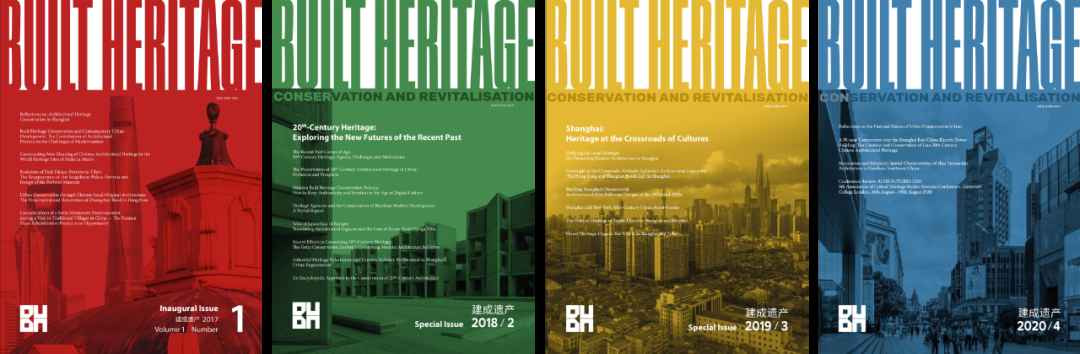
Built Heritage 建成遗产|欢迎投稿
CSCD来源期刊核心库 | DOAJ来源期刊 | Scopus来源期刊 |WJCI(STM) 来源期刊 CiteScore 2.4 SJR 0.418 SNIP 1.144 官网|www.built-heritage.net
|
当前位置:首页






Copyright © 2009-2026 World Heritage Institute of Training and Research for the Asia and the Pacific Region